
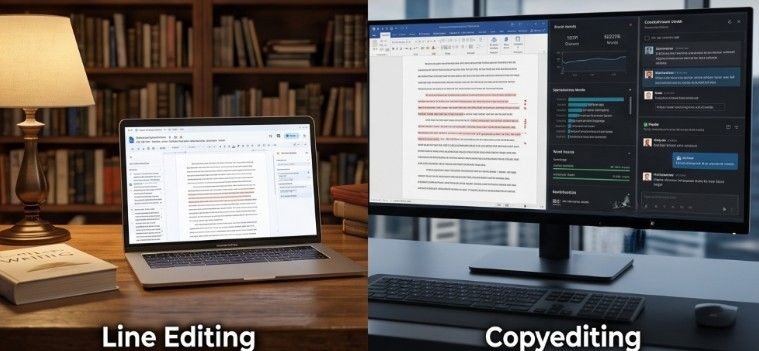
Navigating the final stages of manuscript production often feels like trying to decipher two sides of the same coin, especially when deciding on line editing vs copyediting inside modern publishing software. Both pass types work magic on raw text, yet they target completely different layers of prose. Understanding these distinctions saves time, cuts publishing tool costs, and protects author sanity across every manuscript release.
Key Takeaways
- Line editing transforms style, tone, and sentence flow to elevate creative storytelling.
- Copyediting corrects technical grammar, mechanics, consistency, and style guide rules.
- Always perform line edits first, followed by copyediting and final proofreading passes.
- Style guides like CMOS or AP dictate mechanical consistency during copyedits.
- Modern editorial software tools accelerate both stylistic rhythm and technical copyediting precision.
Unpacking the Core Structural Differences
Understanding where each type of edit fits into your publishing process helps ensure your work is polished both creatively and technically.
Think of line editing as the artistic overhaul and copyediting as the mechanical tuning. A line editor examines sentence rhythm, pacing, and vocabulary choices, ensuring words resonate deeply with human readers. They refine awkward phrasing, smooth out transitions, and enhance creative narrative voice across chapters.
Conversely, copyediting focuses strictly on technical accuracy, rule compliance, and structural consistency. Copyeditors apply house style guides, fix misplaced modifiers, correct punctuation errors, and verify factual details. While line editors craft compelling art, copyeditors ensure strict linguistic order and technical precision throughout manuscripts.
| Feature | Line Editing | Copyediting |
| Primary Focus | Style, voice, tone, and pacing. | Grammar, spelling, and punctuation. |
| What They Do | Rewrites clunky sentences, fixes run-ons, and improves “show, don’t tell”. | Enforces style guides (e.g., AP or Chicago), checks facts, and ensures consistent eye/hair color for characters. |
| When It Happens | Earlier in the process, right after developmental editing. | The final stage before a manuscript is formatted or sent to a proofreader. |
| Type of Changes | Subjective, interpretive, and stylistic. | Objective, rule-based, and mechanical. |
Order of Operations in Editorial Workflows
Managing editorial production demands a clear sequential pipeline inside digital publishing platforms.
Skipping straight to technical grammar cleanup before refining artistic flow wastes valuable editorial resources. If a line edit restructures three clunky paragraphs into one crisp sentence, any copyediting previously performed on those removed sentences goes down the drain. Aligning sequential stages in your digital publishing software eliminates redundant work and keeps team projects moving smoothly.
Always start with developmental editing for broad story structure, followed by line editing for sentence art. Once phrasing shines, run a thorough copyediting pass to fix mechanics, hyphenation rules, and style guide guidelines. Finish up with a final proofread on formatted pages to catch floating layout errors before printing.
Transforming Prose with Real Examples
Seeing identical sentences transformed by each editing phase clarifies how these roles function in practice.

Raw manuscript drafts often contain mixed issues, combining clunky phrasing with outright mechanical errors. A line edit tackles voice and emotional pull first, while a copyedit focuses on syntax rules, punctuation standards, and term consistency. Examining a direct before-and-after breakdown reveals how each distinct editing layer upgrades draft quality.
Original Draft: “She was feeling very reluctant about giving him her leather purse, but after 30 seconds passed, the security guard handed it back to her and she felt relieved.”
After Line Editing: “She hesitated to surrender her purse, exhaling a quiet sigh of relief when the guard returned it seconds later.”
After Copyediting: “She was reluctant to hand over her leather purse; thirty seconds later, the security guard returned it, leaving her relieved.”
Notice how the line edit reworks passive phrasing into vivid action, improving sensory integration and emotional resonance. The copyedit retains original sentence structure but fixes style errors, changing spelled-out numbers like “30” to “thirty” based on Chicago Manual of Style standards.
How to Apply Line Editing vs Copyediting in Real Life
Applying structured editing strategies within digital manuscript workflows guarantees clean, market-ready releases.
- First, establish a clean line editing protocol by reading text aloud or using text-to-speech software extensions. Focus strictly on voice, cadence, and sentence variation. Highlight repetitive word choices, trim fluff phrases, and ensure chapter transitions feel natural and engaging before touching any grammatical settings.
- Next, transition into the copyediting phase by activating automated style checkers inside your publishing environment. Select your preferred style guide, such as Chicago Manual of Style or AP Style, to scan for punctuation consistency, numeral rules, and hyphenation. Verify factual references, character names, and timeline continuity to eliminate mechanical oversights.
- Finally, log revision metrics within your publication management tools to evaluate author progress over time. Tracking recurring grammatical or stylistic habits helps editorial teams provide targeted feedback. This systematic approach streamlines future draft passes and significantly reduces total production time across every title.
The Tooling Breakdown for Modern Editors

Integrating professional editing tools into author management dashboards streamlines both stylistic and mechanical revisions.
Digital editorial tools have completely changed how teams to format the manuscript review passes. Style-checking extensions help authors identify repetitive words, passive voice spikes, and awkward sentence lengths during initial line edit phases. This automated assistance frees human editors to focus on nuanced tone and creative direction.
Copyediting workflows thrive on dedicated consistency checkers alongside online reference platforms. Modern software scans documents for hyphenation mismatches, spelling variations, and numeral formatting in minutes. Combining intelligent digital tools with trained human oversight guarantees polished manuscripts ready for market distribution.
Frequently Asked Questions
1. Is line editing the same as copy editing?
No, line editing refines sentence style, tone, and creative phrasing flow. Copyediting focuses strictly on technical grammar rules, mechanics, punctuation, factual consistency, and house style guide adherence across your entire manuscript.
2. Is copy editing a dying field?
No, copyediting remains essential for publishing quality. While automated digital tools assist with basic mechanics, professional human oversight guarantees contextual accuracy, subtle logic checks, brand integrity, and nuanced language choices.
3. What are the four types of editing?
The four standard editing types are developmental editing for broad structure, line editing for artistic style, copyediting for technical mechanics, and proofreading for final page layout and formatting checks.
4. What are the 4 C’s of copy editing?
The four C’s of copyediting are clarity, coherency, consistency, and correctness. Ensuring these four pillars are met guarantees your manuscript draft reads smoothly without mechanical errors distracting the audience.
Unlocking Editorial Magic: Line Editing vs Copyediting Mastery
Choosing the right editorial pass at the right time transforms chaotic drafts into publication-ready masterpieces. Balancing line editing vs copyediting passes ensures your publishing platform delivers exceptional literary quality every single time. Elevate your production pipeline today by integrating smart publishing tools that streamline style, mechanics, and team collaboration seamlessly.